How to Use a Rowing Machine: Proper Form in 4 Steps (Plus the 5 Mistakes Almost Every Beginner Makes)
Last updated November 2026
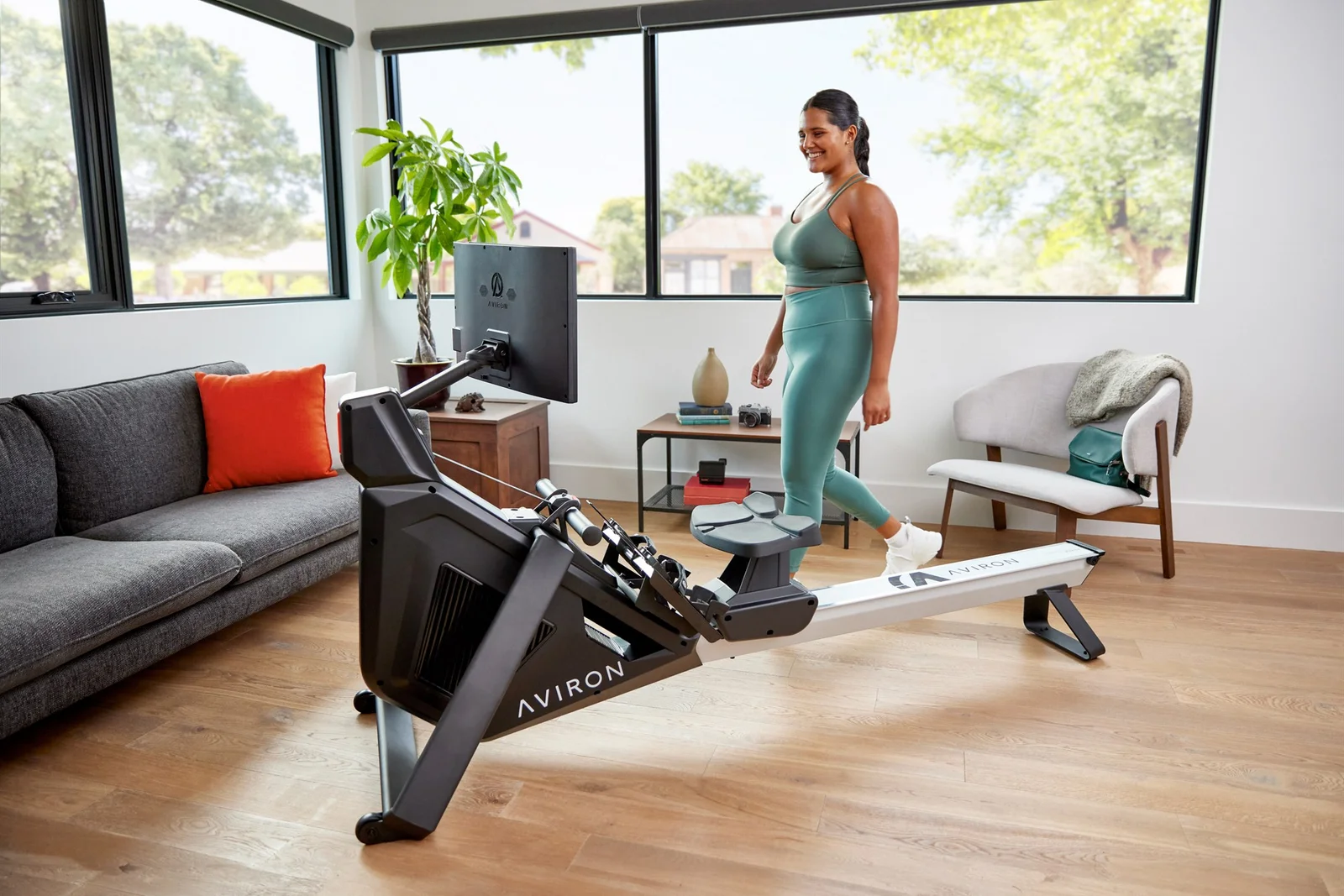
Short answer: To use a rowing machine, strap your feet in across the widest part of your foot, set a low resistance, and repeat one sequence. Push with your legs, lean back slightly, then pull the handle to your lower ribs. Come back in reverse: arms out, body forward, knees bend. Legs, body, arms as you push away. Arms, body, legs as you come back. Push quickly, return slowly.
That's the whole stroke. The tricky part is keeping that order for 20 minutes while your arms keep trying to cut in line, and that's where most beginners need help, whether it comes from a coach, a video of themselves or the screen on an Aviron Strong Series.
In this article
- How do you set up a rowing machine?
- What are the 4 steps of the rowing stroke?
- What resistance and stroke rate should a beginner use?
- What are the 5 most common rowing machine mistakes?
- How can the screen teach you proper rowing form?
- What should your first month of rowing look like?
- FAQ
How Do You Set Up a Rowing Machine Before Your First Stroke?
Check five things before you pull the handle:
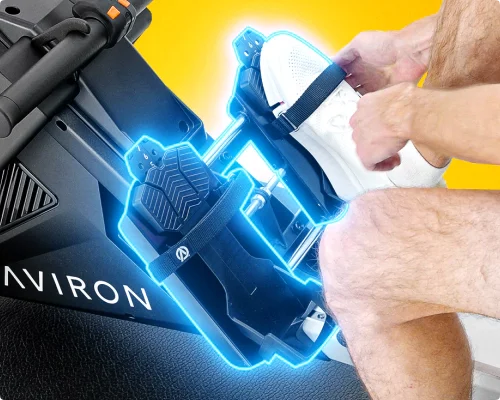
- Feet. Tighten the strap across the widest part of your foot, just behind your toes. If it sits too far back, you lose the solid platform your legs push against. Your heels can lift a little as you slide forward. That's normal.
- Foot width. Most rowers only adjust for shoe size. The Strong Series footplates also slide wider or narrower, so you can row at your own hip width instead of the machine's.
- Resistance. Start low. Numbers are below.
- Grip. Fingers over the handle, thumbs underneath, wrists flat. Hold it loosely enough that your forearms aren't burning before your legs are. The Strong Series handlebar is 19 inches wide and rotates, so your wrists can stay neutral.
- Screen. Put stroke rate (SPM) and time where you can see them. That's all you need in week one.
What Are the 4 Steps of the Rowing Stroke?
Every stroke runs through the same four positions in the same order. Coaches call the push the drive and the trip back the recovery. To judge your lean, picture a clock face beside you with 12 o'clock straight up. That cue comes from rowing coach Katie Wason in Consumer Reports' rowing guide.
Step 1: The Catch
Slide forward until your shins are vertical, or as close as feels comfortable. Arms straight, shoulders relaxed, back long, and your body tipped slightly forward from the hips to about 1 o'clock. You should feel coiled and ready to push, with your chest up.
Step 2: The Drive
Push through your feet with your arms still straight. As your legs pass about halfway, your body starts swinging back from the hips. Your arms only pull once your legs are nearly flat. Legs, body, arms. Your legs make most of the power, so if your arms go first, you're leaving your biggest muscles out of it.
Step 3: The Finish
Legs extended but not locked, body leaning back a little to about 11 o'clock, and the handle at your lower ribs with your elbows just past your sides and your wrists flat. Don't lie back like you're in a deck chair. A small lean, braced through your core, is plenty.
Step 4: The Recovery
Now reverse it. Your arms straighten until the handle passes your knees, your body tips forward to 1 o'clock, and only then do your knees bend to slide you back to the catch. Arms, body, legs. Take your time on this part. Wason suggests coming forward at about half the speed of your drive, which also gives you a moment to breathe.
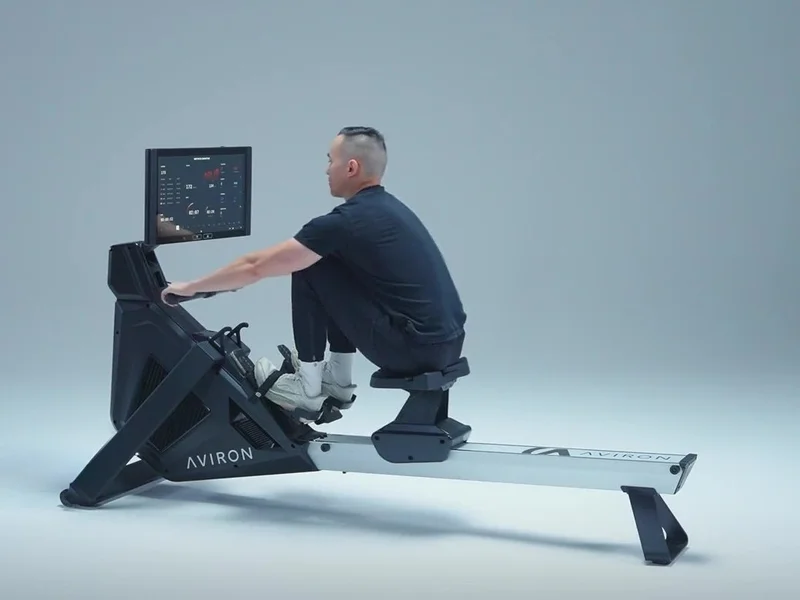
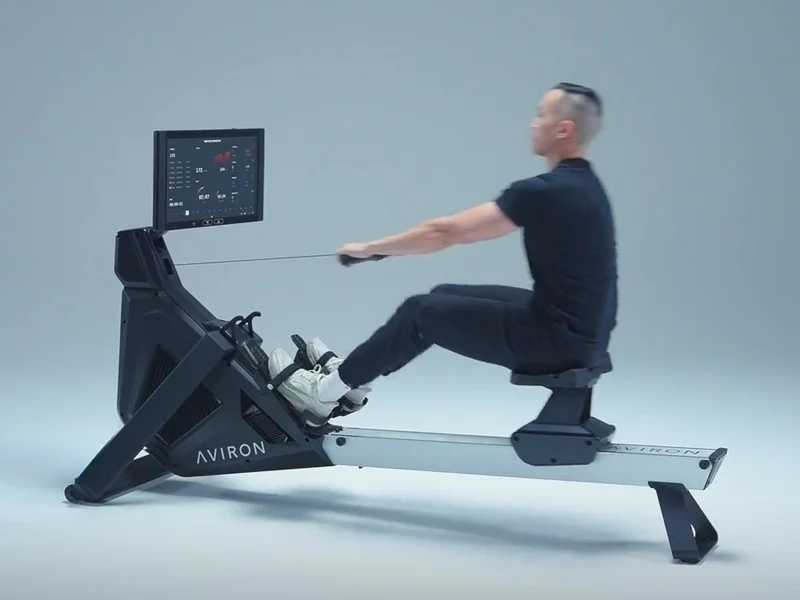
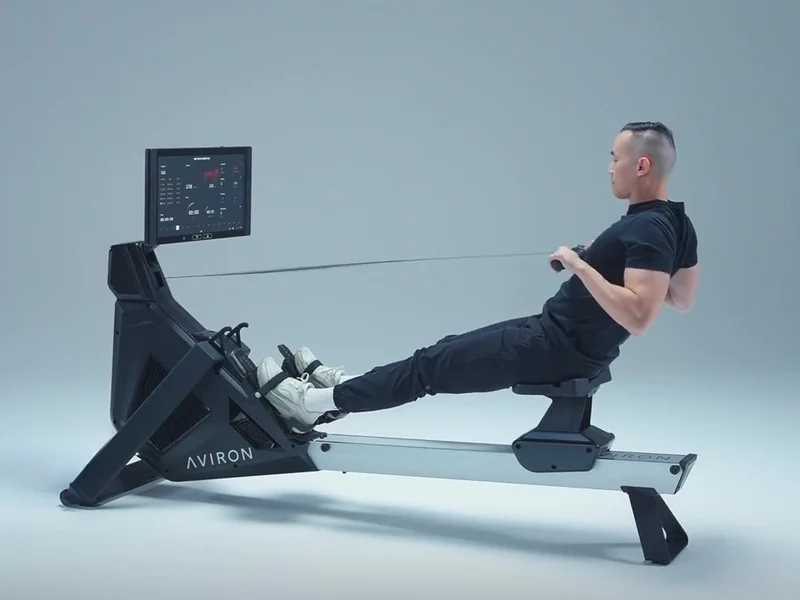
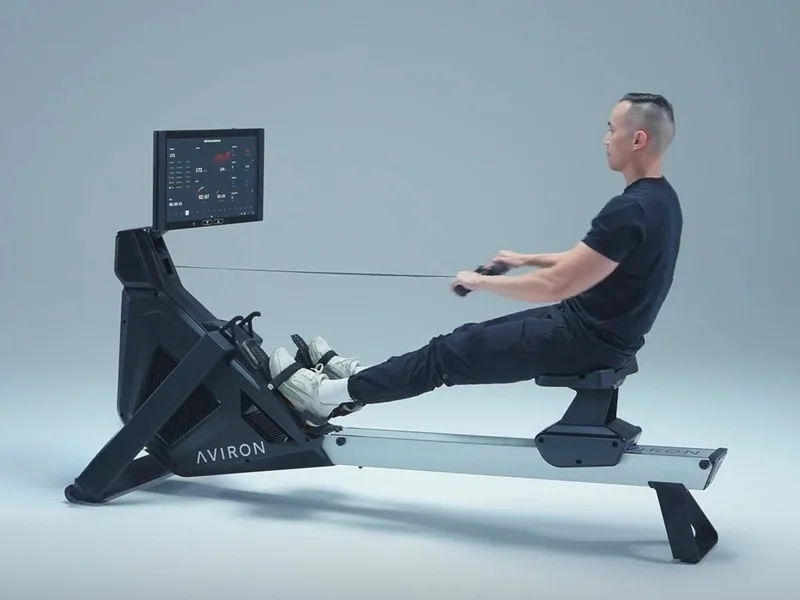
One stroke on the Strong Series, in four frames.
What Resistance and Stroke Rate Should a Beginner Use?
Lower than you think, on both counts.
Resistance. Concept2, which makes the rowers in most gyms, recommends starting its damper at 3 to 5 out of 10 and warns that setting it too high "can exhaust your muscles before you reap the full cardiovascular benefit rowing provides." More resistance feels like more work, but how hard you push is what sets the intensity.
On the Strong Series, resistance runs in 16 steps from 10 to 160. Aviron's guidance is 10 to 100 for cardio and 110 to 160 for strength, so start near the bottom of the cardio range. Then test it with 20 strokes. If your back rounds or your arms jump in early, drop a level. If the handle feels like it's attached to nothing, go up one.
Stroke rate. SPM (strokes per minute) counts how many strokes you take each minute. New rowers almost always go too fast, because a high rate feels busy. Put the effort into each push instead and keep the rate down. These ranges come from Concept2's guidance, via Consumer Reports:
| Effort | Stroke rate | How it feels |
|---|---|---|
| Easy rows and technique practice | 16 to 24 spm | You could hold a conversation |
| Most workouts | 24 to 30 spm | Short sentences only |
| Sprints | Over 30 spm | Talking is off the table |
For your first couple of weeks, stay in the low 20s. If your stroke rate creeps past 30 on an easy row, you're probably rushing the recovery.
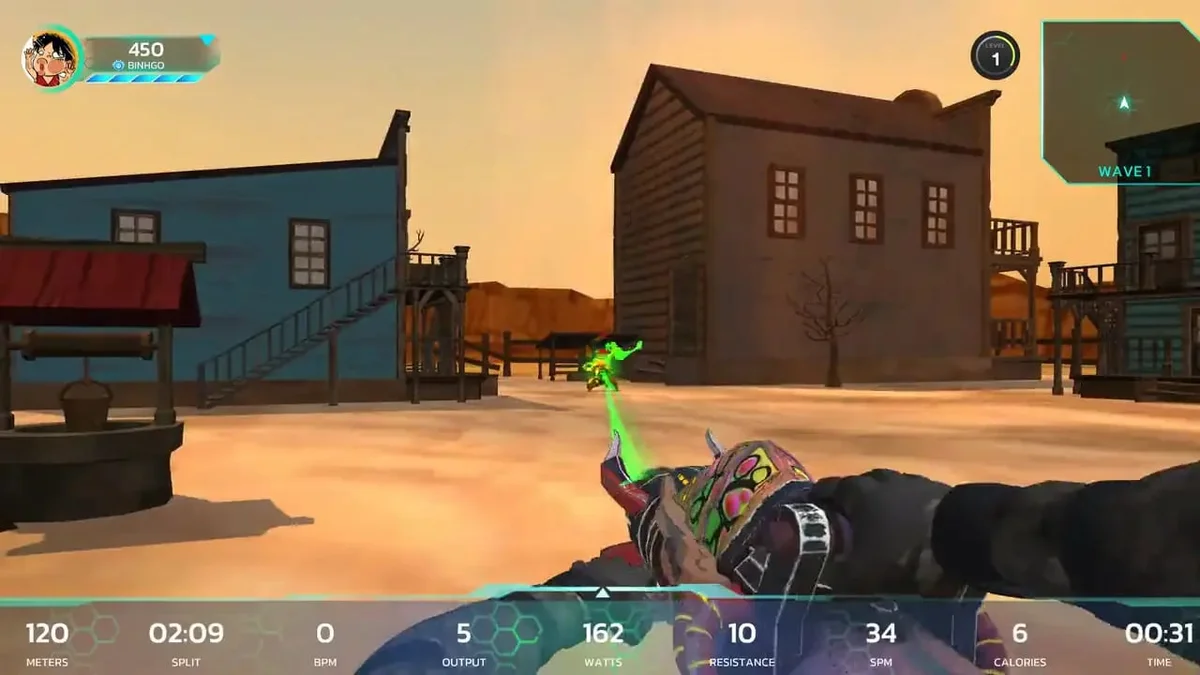

Mounts on the Strong Series handlebar, so you can drop a level the moment your form slips without letting go to reach for the screen.
What Are the 5 Most Common Rowing Machine Mistakes?
Most beginners make at least one of these, and most of them come from breaking the order: legs, body, arms, then arms, body, legs.
| Mistake | How you'll know | The fix |
|---|---|---|
| 1. Pulling with your arms first | Your arms and shoulders tire before your legs do | Keep your elbows straight until your legs are nearly flat |
| 2. Lunging or rounding at the catch | Your lower back aches after a session | Lean only to 1 o'clock, keep your chest up, and drop a resistance level |
| 3. Bending your knees too early | Your hands have to go up and over your knees on the way forward | Arms out, body forward, then knees |
| 4. Rushing the slide | The seat races forward and your stroke rate creeps past 30 | Count "one" on the push and "two, three" on the way forward |
| 5. Maxing out the resistance | Your legs are cooked in five minutes and your form falls apart | Start low in the cardio range and go up one level at a time |
Concept2 describes mistake 3 as "rowing over a barrel," which is exactly how it feels. The quickest way to spot any of them is to prop your phone on a chair and film 30 seconds from the side, as Wason suggests. Or let the screen do the watching.
How Can the Screen Teach You Proper Rowing Form?
Learning the stroke takes a few sessions. Sticking with it is harder. When researchers followed 5,240 new members of a Brazilian gym, 63% had quit before their third month. Sloppy form doesn't help, because a sore back is a great excuse to skip tomorrow.
So the Strong Series puts the teaching inside the workout, where you'll actually see it. Pick your player:
Coached Classes for Your First Rows
Learn to Row is a coached class built for beginners, and Intro to Rowing works on technique and confidence. A coach leads the session while you row, so you learn the order by doing it.
"I'm new to rowing and the rowing 101 workout is great introduction to rowing to learn the proper technique."
Programs That Build It Over Weeks
Row-20 mixes cardio, HIIT, technique and fusion workouts into 20-minute sessions over 20 days, five days on and two off. New Rower. New You is a progressive six-week program that starts from square one. The British Rowing Beginner Training Program gives you eight weeks of structured sessions from 9 to 29 minutes, with stroke rate targets to hit.
"Yes, the row20 program on the Aviron was a game changer for proper form and technique with rowing. Everyone rowing should do this program!"
Games That Reward a Steady Rhythm
A steady stroke rate is one of the harder habits to build, and the science-backed games train it without making a big deal of it. One pirate game flashes prompts like "Hit 26-27 SPM within 9 seconds for 100 bonus points." You're chasing points, and your rhythm gets better anyway. When you want to work on it on purpose, Total Tempo sharpens rhythm and control, and Rhythm Ladder raises your stroke rate and resistance step by step.
Coached classes and scenic rows use the same game psychology: instant feedback on every stroke and progress you can see from one week to the next. It's a big reason 92% of Aviron members are still working out a year later. You can browse everything in Aviron World.

Beginner coached classes, multi-week programs and science-backed games on a 16- or 22-inch touchscreen, plus 16 resistance levels and footplates that adjust for width.
What Should Your First Month of Rowing Look Like?
Keep sessions short for the first month and spend them getting the order right. Here's a simple ramp, with Strong Series workouts that fit each week:
| Week | Sessions | Focus | Try on the Strong Series |
|---|---|---|---|
| Week 1 | 3 x 10 to 15 min | The order: legs, body, arms | Learn to Row, Intro to Rowing |
| Week 2 | 3 x 15 to 20 min | A slow recovery at 18 to 24 spm | Total Tempo, or a scenic row |
| Week 3 | 3 to 4 x 20 min | Holding form as you tire | British Rowing Beginner program, or New Rower. New You |
| Week 4 | 4 x 20 to 25 min | A few short, harder pushes | Rhythm Ladder, or a science-backed game |
If you'd rather row most days, Row-20's five-days-on schedule does the planning for you. Once all of this feels easy, our HIIT rowing workouts are the next step, from a 10-minute starter to a 30-minute session.
Frequently Asked Questions
Are you supposed to lean back on a rowing machine?
A little. At the finish, lean back to about 11 o'clock with your core braced. Concept2 calls an extreme layback "a weak position" because leaning further doesn't add useful length to your stroke.
Should your heels lift on a rowing machine?
A little, at the catch, is fine. Concept2's technique guide says your heels "may lift as needed." Keep the strap across the widest part of your foot so your feet stay connected through the whole stroke.
How long should a beginner row?
Start with 10 to 15 minutes, three times a week, and build toward 20 to 30 minutes over your first month. Short sessions with clean form beat long ones where the order falls apart at the end. More in how long you should use a rowing machine.
Is 20 minutes of rowing a day enough?
For general health, yes. The WHO recommends 150 to 300 minutes of moderate activity or 75 to 150 minutes of vigorous activity a week. Twenty minutes of moderate rowing on most days gets you close, and four hard 20-minute sessions cover the vigorous target.
Why does my lower back hurt after rowing?
Usually it's form: rounding forward at the catch, leaning too far back at the finish, or heaving with your back before your legs have pushed. Drop a resistance level, slow your stroke rate and film yourself from the side. If the pain sticks around, see a doctor or physical therapist. Our guide to preventing rowing machine injuries has more.
The Strong Series coaches your first strokes with beginner classes, then keeps you coming back with science-backed games, live races and scenic rows.
Shop the Strong Series →Or see how it compares in Best Rower of 2026
30-day risk-free home trial · Free shipping · Financing available · HSA/FSA eligible


