Rowing vs. Running for Full-Body Conditioning


For full-body conditioning specifically, rowing wins. A rowing stroke recruits over 85% of your muscles across nine major muscle groups, while running is predominantly a lower-body activity with the upper body acting as a stabilizer rather than a worker. Rowing also lets you add resistance, so it trains strength endurance in a way running cannot. Running still beats rowing on two counts that matter: it builds bone density in your legs and hips because it is weight-bearing, and it is the more specific choice if running itself is your goal. The honest answer for most people is that rowing is the better single machine for whole-body conditioning, and running is the better supplement to it.
In this article
- Which works more muscle?
- The conditioning scorecard
- Does rowing build real strength?
- Which is harder on your body?
- What running does better
- How to combine both
- FAQ
Which works more muscle, rowing or running?
Rowing, and not by a small margin.
Indoor rowing recruits more than 85% of the muscles in your body across nine major muscle groups, according to British Rowing. The stroke breaks down to roughly 60% legs, 20% core and 20% arms, so every single repetition is a coordinated push, brace and pull. Your quads and glutes drive, your trunk transfers the force, and your lats, rhomboids and biceps finish it. Then you do it again, 25 times a minute.
Running is a superb cardiovascular activity, but its muscular demand is concentrated below the waist: quads, hamstrings, glutes and calves, with the core stabilizing and the arms swinging for balance and rhythm. Your back and shoulders are along for the ride. That is not a criticism, it is just what the movement is, and it explains why runners so often need separate strength work to stay durable while rowers get a meaningful chunk of it built in.
If you want the detail on which muscles rowing actually hits, we broke it down in what muscles a rowing machine works.
The full-body conditioning scorecard
| Factor | Rowing | Running |
|---|---|---|
| Muscle recruited | 85%+, nine major groups | Mainly lower body |
| Upper body and back | Loaded every stroke | Postural only |
| Adjustable resistance | Yes, a true strength range | No, only pace and incline |
| Joint impact | Low, no ground impact | High, repeated loading |
| Injury risk | Lower, mostly form-related | About 26% of recreational runners a year |
| Bone density, legs and hips | Limited, non weight-bearing | Strong, weight-bearing |
| Calories per minute | High | Slightly higher |
| Learning curve | Real technique to learn | Almost none |
Does rowing actually build strength, or just endurance?
This is where the comparison stops being close, because rowing has a lever running does not: resistance.
When you run, your only intensity controls are pace and gradient. You cannot make each stride heavier. On a rower you can make every stroke heavier, which turns a cardio session into a strength-endurance session without changing machines. On an Aviron rower, levels 1 to 10 cover the cardio range and levels 11 to 16 add up to 100 lbs of magnetic resistance, which is genuinely loaded work for your legs, back and grip rather than just faster cardio.
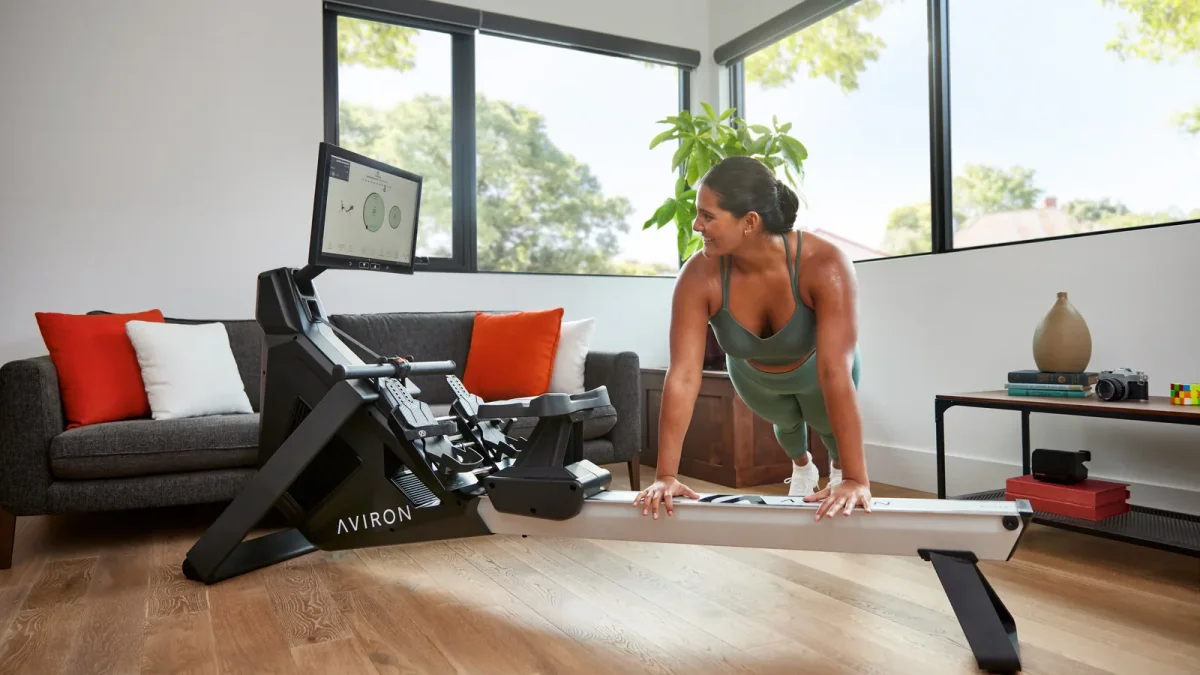
Be realistic about the ceiling: rowing will not build maximal strength the way heavy barbell work does, and nobody should claim otherwise. What it does is develop muscular endurance across almost your whole body at the same time as your aerobic base, which is precisely what "conditioning" means. For a fuller list of what that delivers, see 15 rowing machine benefits.
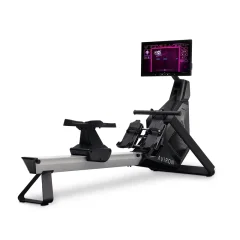
Dual air and magnetic resistance with a dedicated strength range, plus guided programs that add off-machine work. Prefer to run? The Victory Treadmill runs the same library.
Which is harder on your body?
Running, clearly, and the numbers are not subtle. Across a systematic review of studies covering more than 23,000 runners, the annual incidence of running-related injury in recreational runners was about 26%, and runners sustained roughly 7.7 injuries per 1,000 hours of running. The knee is the most commonly injured site at around a quarter of all injuries, followed by the foot and ankle and the lower leg.
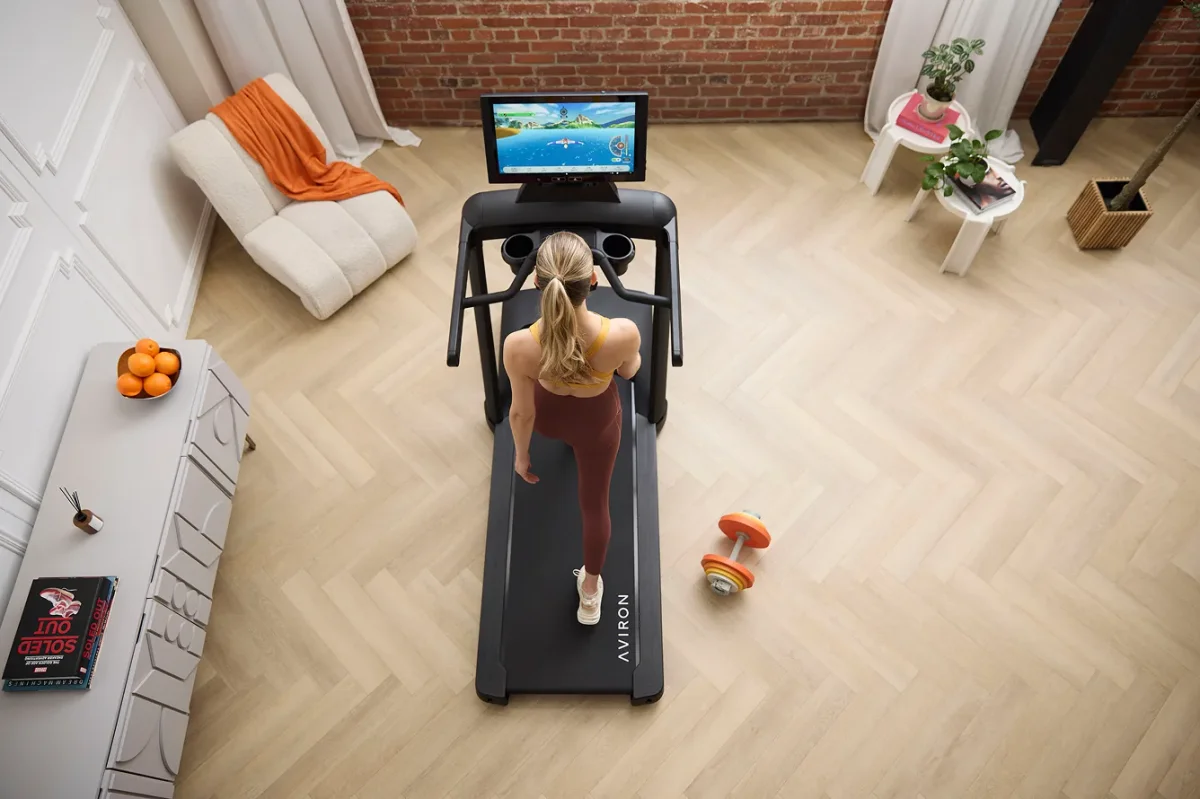
Rowing removes ground impact entirely. Your feet never leave the footplate, so there is no landing force to absorb, which is why rowing is a standard recommendation for people with knee or hip complaints who still want hard cardio. It is not risk-free: the characteristic rowing injury is lower back pain, and it comes almost entirely from one error, opening your hips and swinging your torso back before your legs have finished driving. That is a technique problem with a technique fix, covered in correct rowing machine form.
What does running do better than rowing?
Two things, and a post that skipped them would not be worth reading.
Bone density. This is running's real advantage. Because running is weight-bearing, the ground reaction forces and muscle strain it generates stimulate bone, and runners show greater bone mineral density throughout the lower limb than inactive people. Rowing sits between weight-bearing and non weight-bearing, and the evidence is more mixed: research on elite rowers found no significant difference in total bone density compared with controls, but a notable redistribution of bone mass from the lower limbs toward the trunk. If protecting hip and leg bone density is a priority, rowing alone is not the complete answer, and you should add weight-bearing work.
Specificity. If your goal is to run a 10K, run. No amount of rowing makes you good at absorbing landing forces or holding running economy at pace. Rowing is excellent cross-training for runners precisely because it adds aerobic volume without adding impact, which is a different job from making you a better runner. We covered that trade in is the rowing machine good for runners.
On calories, running holds a slight per-minute edge at matched effort, though the gap is smaller than most people assume and rowing lets you accumulate more total minutes without beating up your joints. The real numbers are in how many calories rowing burns and is rowing good for weight loss.
How should you combine rowing and running?
Stop treating it as a either-or. The two are close to complementary: rowing supplies upper-body and posterior-chain conditioning plus impact-free aerobic volume, and running supplies weight-bearing loading and running-specific fitness.
A simple weekly split that works for general conditioning: two rowing sessions, one of them in the strength range, plus one or two runs. Row on the days after hard runs, because it lets you train aerobically while your joints recover. If you only ever want to own and use one machine, row, then add bodyweight or loaded lower-body work for bone health.
Condition your whole body, not a quarter of it
Games, classes and guided programs on a rower built for cardio and strength. Try it at home before you commit.
Explore the Strong Rower →30-day risk-free home trial. Free shipping, and no restocking or return shipping fees.
Frequently asked questions
Is rowing better than running?
For full-body conditioning and joint safety, yes. Rowing recruits over 85% of your muscles and removes ground impact, and it lets you add resistance to train strength endurance. Running is better for building bone density in your legs and hips, and better if running itself is the goal. Neither is universally superior, but rowing is the stronger choice as a single all-round conditioning tool.
What muscles does rowing work that running does not?
Mainly your back and arms: lats, rhomboids, rear shoulders and biceps, all of which are loaded on every stroke. Rowing also loads your core far more actively, because your trunk has to transfer leg drive into the handle rather than simply staying upright. In running, the upper body stabilizes and swings but is never really under load.
Does rowing burn more calories than running?
Running burns slightly more per minute at an equivalent effort level, but the difference is smaller than most people expect. Because rowing is non-impact, many people can row longer and more frequently without soreness, so weekly totals often end up similar or better. Total consistent effort matters far more than per-minute rate.
Is rowing or running better for weight loss?
Whichever you will do consistently, because weight loss comes down to a sustained calorie deficit rather than machine choice. Rowing has a practical edge for many people: it is easier on the joints, so it is easier to keep doing four or five times a week for months, and it preserves more upper-body muscle while you lose fat.
Can rowing replace running entirely?
For general fitness and conditioning, yes. For bone health it is an incomplete replacement, because rowing is not fully weight-bearing, so pair it with walking, hiking or resistance training. And if you have a running goal, rowing supplements your training rather than substituting for it.
Is rowing easier on your joints than running?
Considerably. Your feet stay strapped to the footplate, so there is no landing impact at all, which is why rowing is routinely recommended for people managing knee, hip or ankle issues. The one caveat is your lower back, which stays healthy as long as you drive with your legs before opening your hips.


