Is Rowing Good for Belly Fat? What the Science Actually Says
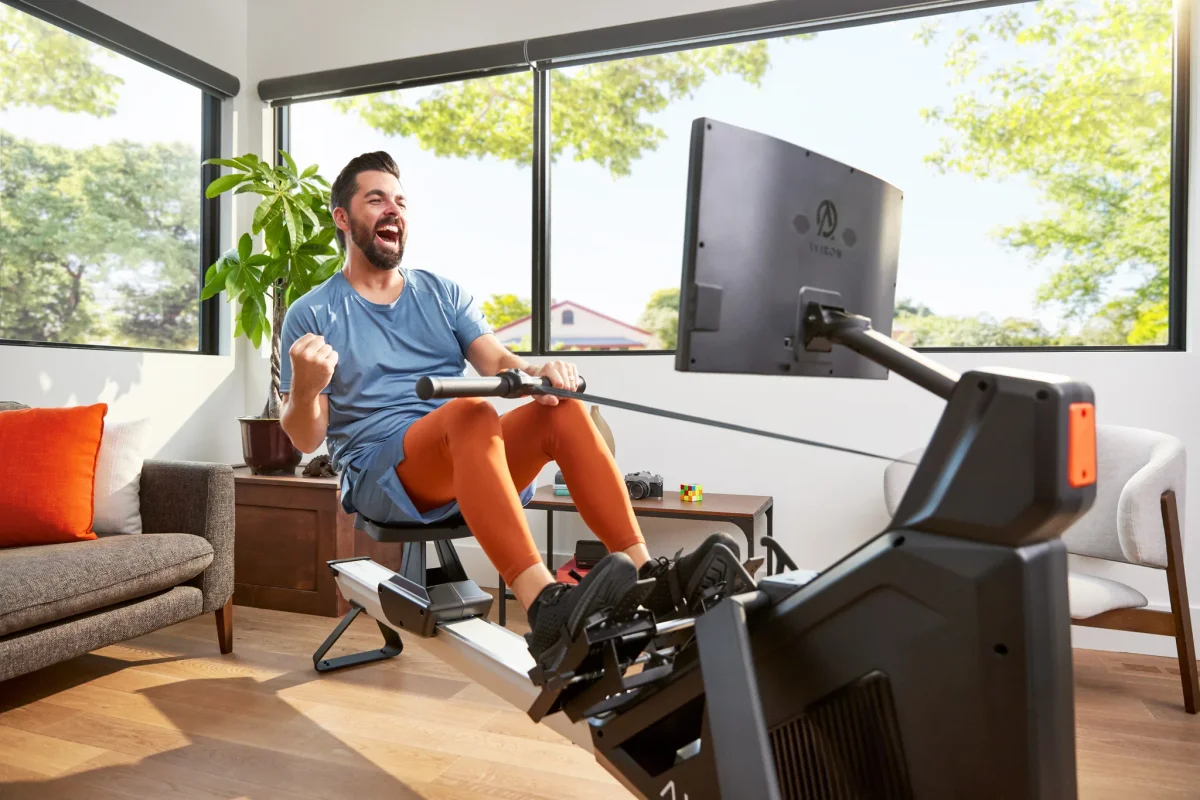
Yes. Rowing is one of the most effective forms of cardio for losing belly fat, but not for the reason most people assume. You cannot burn fat off one specific spot, so rowing does not melt your belly directly. What it does do is drive down your total body fat, and belly fat, including the deep visceral fat linked to health risk, goes with it. Rowing is uniquely good at this because it is a full-body effort that recruits about 86% of your muscles, burns a high number of calories per session, and blends cardio with resistance in a single stroke. The research is also clear on one more thing that matters more than any of the above: results come from doing it consistently, which is exactly where most home machines quietly fail.
In this article
- Can rowing actually reduce belly fat?
- Why rowing burns more fat than most cardio
- Can you target belly fat directly?
- How long it takes to see results
- Does rowing tone your stomach?
- FAQ
Can rowing actually reduce belly fat?
Yes, but it helps to understand what belly fat is. Your body stores it two ways. Subcutaneous fat is the pinchable layer just under the skin. Visceral fat is the deeper fat packed around your organs, and it is the one associated with higher risk of heart disease and type 2 diabetes. The good news is that visceral fat is metabolically active, and it responds especially well to aerobic exercise.
The evidence is strong. A 2013 meta-analysis found that an aerobic exercise program reduced visceral fat even without any change in diet. A landmark Duke University study showed aerobic training beat resistance training for burning visceral and liver fat. And a 2024 review in JAMA Network Open found that at least 150 minutes of aerobic exercise per week produced clinically meaningful reductions in waist circumference and body fat.
Rowing is aerobic exercise with a built-in resistance component, so it hits exactly the type of fat that sits around your middle. The catch, which we will keep coming back to, is that you reduce belly fat by reducing overall fat, not by working the area itself.
Why rowing burns more fat than most cardio
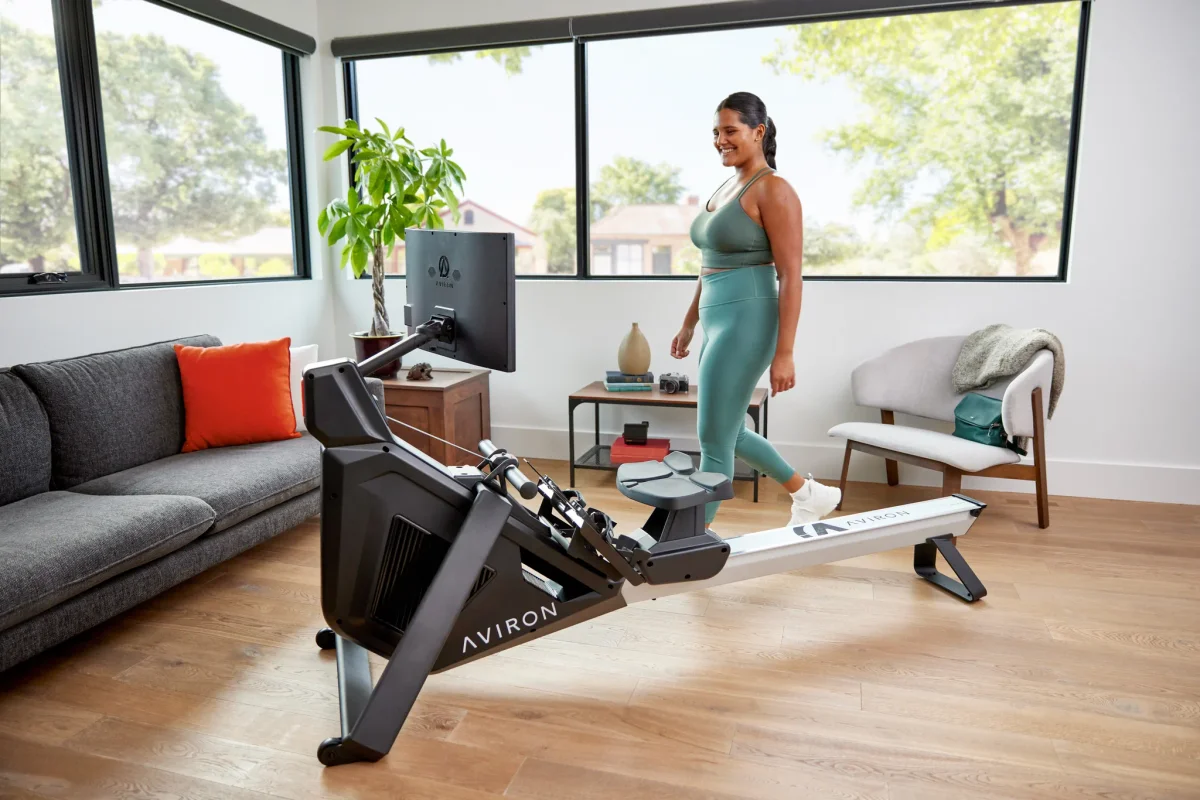
Most cardio machines work your legs and little else. A stationary bike is mostly lower body. Walking is mostly lower body. Rowing is different: a single stroke drives through your legs, hips, core, back, shoulders, and arms, engaging roughly 86% of your muscle mass. More muscle working at once means more calories burned per minute, and a larger post-workout calorie burn (the afterburn, or EPOC) as your body recovers.
Rowing is also cardio and strength in the same movement. The drive phase is a genuine resistance effort, so you build muscle while you burn fat, and more muscle raises your resting metabolism over time. Just as important, rowing is low-impact, so you can do it often without beating up your joints. That protects the one variable that decides everything: consistency.
Here is roughly what a 30-minute session burns, per Harvard Health:
| Body weight | Moderate effort | Vigorous effort |
|---|---|---|
| 125 lb | 210 cal | 255 cal |
| 155 lb | 252 cal | 316 cal |
| 185 lb | 294 cal | 377 cal |
Push the pace or add intervals and those numbers climb. For a deeper breakdown, see our guide on how many calories rowing burns.
Dual air and magnetic resistance across 16 levels works nearly your whole body every stroke, so you burn more in less time.
Can you target belly fat directly?
No, and this is the single most important thing to understand. Spot reduction, the idea that exercising a body part burns the fat sitting on top of it, does not work. Thousands of crunches will not burn belly fat. When your body taps into fat for energy, it pulls from stores all over, and where you lose it first is mostly down to genetics, not which muscle you just worked.
Rowing does engage your core hard on every stroke, which builds and strengthens those muscles. But you will only see that definition once your overall body fat has dropped far enough to reveal it. The winning formula is not a magic exercise. It is a steady calorie burn from full-body training, plenty of aerobic work to attack visceral fat, and a modest calorie deficit from your diet. For more on the whole-body picture, read our guide on whether rowing is good for weight loss.
How long does it take to lose belly fat with rowing?
It depends on your starting point, your diet, your intensity, and above all your consistency. A realistic target is at least 150 minutes of rowing per week, which is about 30 minutes five days a week, in line with the JAMA threshold that produced measurable waist-circumference reductions. Sustainable fat loss lands around 0.5 to 1% of your body weight per week, so think in weeks and months, not days.
Two honest caveats. First, we do not make weight-loss promises: results vary from person to person. Second, diet does a lot of the heavy lifting here. You cannot out-row a consistent calorie surplus. Pair regular rowing with sensible eating and the belly fat comes off; treat the rower as permission to eat whatever and it will not.
Does rowing tone your stomach and build core strength?
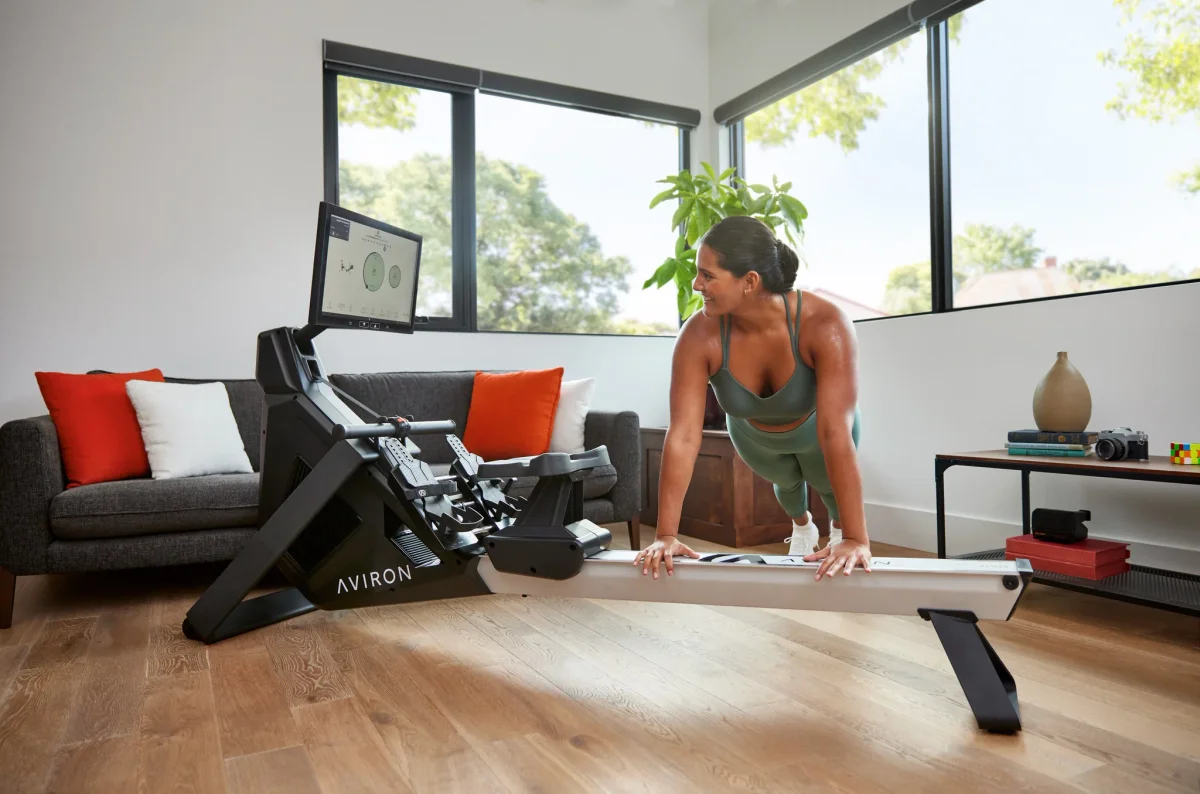
Yes on both counts. Every stroke requires you to brace your midsection to transfer power from your legs to the handle, so rowing steadily builds core and lower-back strength. But "toned" is really two things at once: enough muscle to create shape, and a low enough body-fat level to see it. Rowing helps on both fronts, building the muscle underneath while burning the fat on top. That is more than most cardio can claim. For targeted core work, see our guide on how rowing tones your abdominal muscles.
"A little over 4 months ago I started using this amazing machine. As of today I am down 32 pounds and my pant size has gone from a size 40 down to a 36."
Why most people never lose the belly fat
Here is the part the science keeps pointing to. Losing belly fat is simple on paper: aerobic training, full-body effort, a small calorie deficit, repeated for a few months. The hard part is not the formula. It is doing it week after week. Most fitness equipment becomes an expensive clothes rack by month two, not because people lack willpower, but because the workout was engineered to be boring while everything else competing for your attention was engineered to be addictive.
That is the problem Aviron was built to solve. The Strong Rower puts game psychology, reward loops, streaks, competition, and instant feedback, directly into the workout, so a session feels like play rather than a chore. It is why 92% of Aviron members are still working out a year later. The best fat-loss workout is not the one that burns the most calories on a chart. It is the one you will still be doing in March.
Row today, and actually want to row tomorrow
Full-body cardio that feels like a game, not a grind. Try the Strong Rower risk-free at home.
Shop the Strong Rower →30-day risk-free home trial · 0% APR financing · HSA/FSA eligible · 20-year warranty
Frequently asked questions
Can rowing alone reduce belly fat?
It can, because rowing burns a high number of calories and aerobic exercise specifically reduces visceral belly fat. But you will lose it fastest by pairing rowing with a modest calorie deficit from your diet. Exercise plus sensible eating beats either one on its own.
How long should I row each day to lose belly fat?
Aim for 20 to 30 minutes on most days, or roughly 150 or more minutes per week. Consistency across the week matters far more than any single long session.
Is rowing or running better for belly fat?
Both are effective aerobic exercise. Rowing works more muscle groups per stroke and is low-impact, so it is gentler on your joints and easier to keep doing consistently, which is the factor that actually drives fat loss over time.
Does rowing give you abs?
Rowing strengthens your core on every stroke, but visible abs only appear once your overall body fat is low enough to reveal them. Rowing helps on both fronts by building the muscle and burning the fat.
How soon will I see results from rowing?
Most people notice better fitness and energy within a few weeks. Visible fat loss usually takes one to three months of consistent rowing combined with sensible eating.


