How to Row a Faster 2000m: 6 Ways to Drop Your Split Time
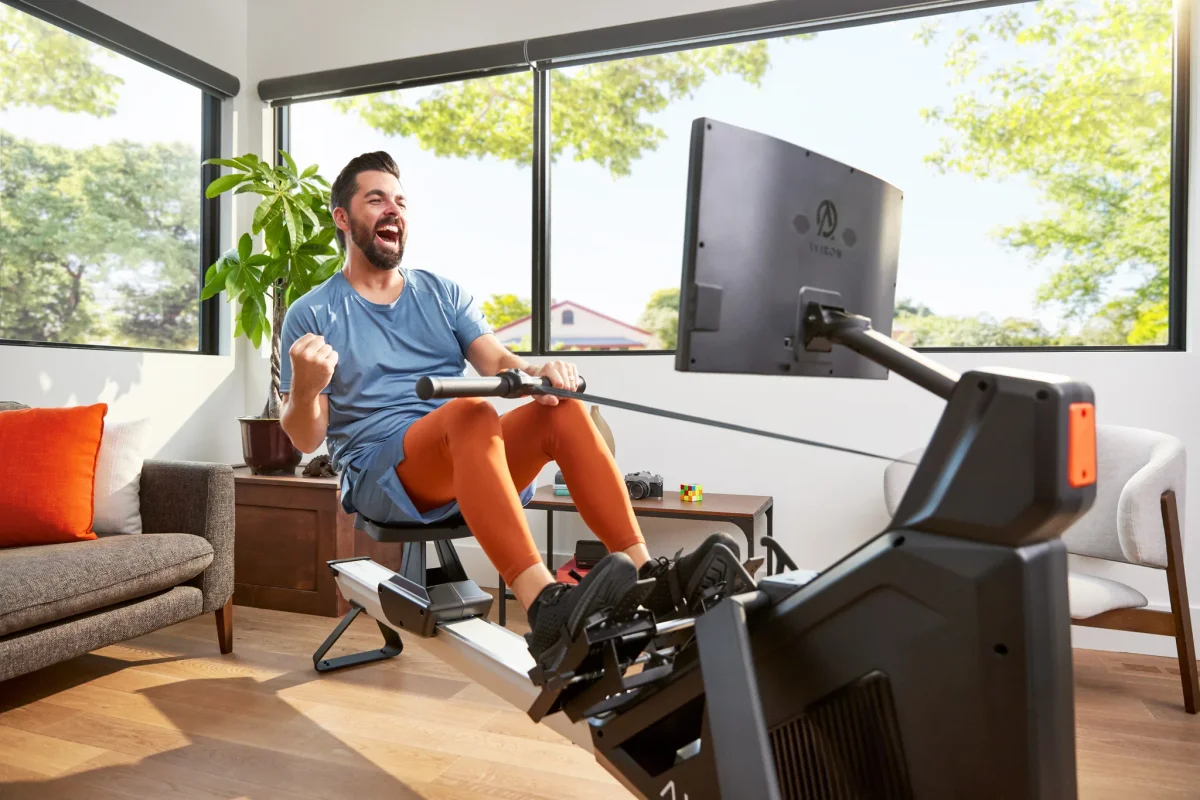
Short answer: To row a faster 2000m, fix the stroke sequence first (legs, then core, then arms), set your drag factor instead of guessing at the damper, slow your recovery to roughly half the speed of your drive, and train intervals at your goal split rather than only rowing steady state. Most people find several seconds per 500m in technique alone, before fitness even enters the conversation. Your 2000m time is simply your average split multiplied by four, so a 2:00 split is an 8:00 2000m.
The 2000m is rowing's benchmark distance, and it is brutally honest. It is long enough that you cannot fake it with a sprint and short enough that you cannot hide in a comfortable pace. Which is why almost everyone hits a wall where the number on the monitor refuses to move.
Here is the part that changes how you train: dropping ten seconds off your split is not a fixed amount of work. It gets dramatically harder the faster you already are. Understand why, and you stop wasting effort on the wrong things.
In this article
- What is a split time, and why does it get harder to improve?
- What you need before you start
- 6 ways to drop your split time
- Common mistakes that quietly cost you seconds
- Frequently asked questions
What is a split time, and why does it get harder to improve?
Your split is how long it would take you to row 500m at your current pace. It is the number most rowers actually race against, and it is the cleanest way to compare one piece to another. Because the 2000m is four times 500m, your 2000m time is just your average split times four.
Now the important bit. A rowing flywheel is slowed by air, and air resistance rises with the cube of speed. Concept2's published pace and watts relationship works out to watts = 2.80 divided by the cube of your split in seconds per 500m. In plain English: to go twice as fast, you need roughly eight times the power. That is why the same ten seconds costs wildly different amounts of work depending on where you start.
| Split (per 500m) | 2000m time | Power required | Cost of the last 10 seconds |
|---|---|---|---|
| 2:30 | 10:00 | 104 watts | Starting point |
| 2:20 | 9:20 | 128 watts | +24 watts |
| 2:10 | 8:40 | 159 watts | +32 watts |
| 2:00 | 8:00 | 203 watts | +43 watts |
| 1:50 | 7:20 | 263 watts | +60 watts |
| 1:40 | 6:40 | 350 watts | +87 watts |
Read the last column again. Going from 2:20 to 2:10 costs about 24 extra watts. Going from 1:50 to 1:40 costs nearly 90. Same ten seconds, close to four times the work. So if you are new to rowing, your early gains are genuinely cheap and you should go get them. If you are already fast, technique and pacing matter far more than trying to pull harder.
What you need before you start
- A rower with a monitor that shows split, stroke rate, and watts. You cannot fix a number you cannot see.
- Your drag factor, not just your damper number. More on this below.
- A baseline 2000m, rowed honestly and written down, so you know what you are actually improving.
- Roughly three sessions a week, with at least one easy and one hard.
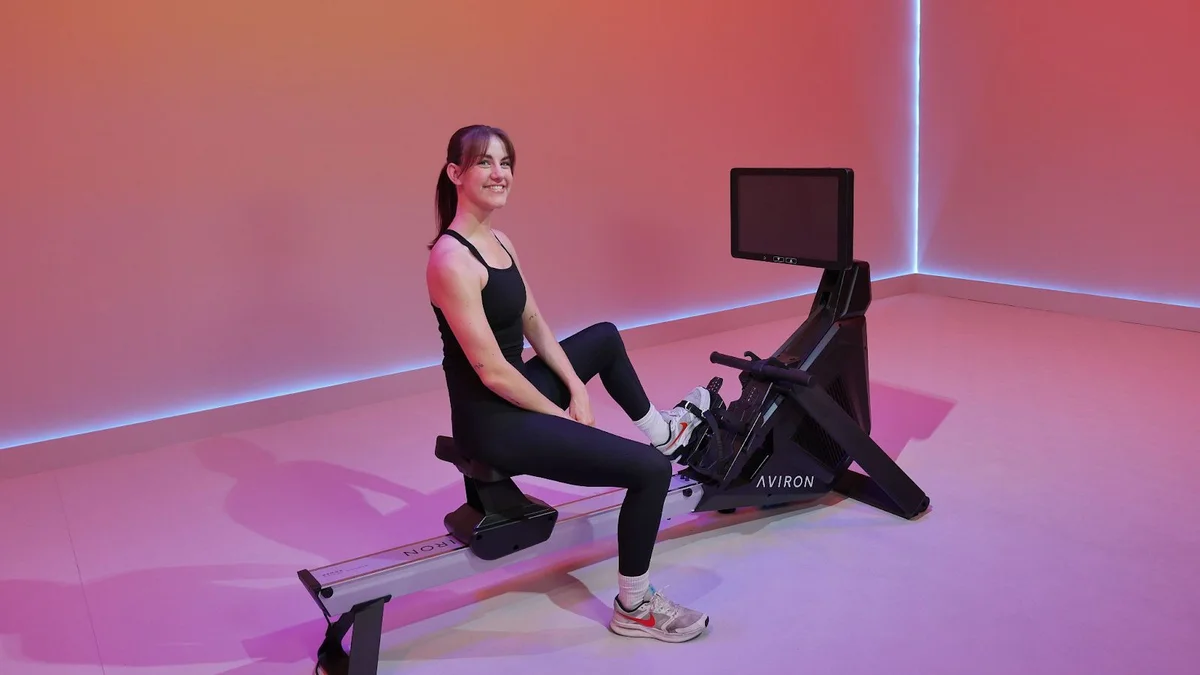
6 ways to drop your split time
1. Fix the sequence: legs, then core, then arms
This is the single biggest free win available, and most people get it wrong. Your legs are the strongest muscles in the chain and should start the drive alone. Then the core swings the torso open. Only then do the arms pull the handle in. Reverse the order on the recovery: hands away, body forward, then let the knees bend.
Pulling with your arms early is the classic error, and it caps your power at whatever your biceps can produce while your quads sit idle. If you fix nothing else, fix this. Our guide to correct rowing machine form walks through the four faults worth checking on video.
2. Set your drag factor, stop guessing at the damper
The damper lever changes how much air reaches the flywheel, so it changes how the stroke feels. Drag factor is what your monitor actually measures: how fast the flywheel slows between strokes. Two machines on damper 5 can have very different drag factors depending on how dusty they are, which is why chasing a damper number is a mistake.
Concept2 recommends starting on a damper setting of 3 to 5, and notes that lower settings suit aerobic work while higher settings turn rowing into more of a strength workout. Crank it to 10 and you will "exhaust your muscles before you reap the full cardiovascular benefit," which feels productive and is not. Most 2000m times improve on a moderate setting with a higher stroke rate, not a heavy one you grind through.
3. Slow the recovery to roughly half the speed of the drive
The drive should be fast and aggressive. The recovery should be patient, about twice as long. That ratio does two things: it lets the flywheel carry speed while you reset, and it gives you a genuine micro-rest every stroke, which is what makes a 2000m survivable.
Rushing back up the slide is the most common reason people gas out at 1200m. It also throws your body weight toward the front of the machine right as the flywheel needs a clean catch. Count it if you have to: one on the drive, two and three on the way back.
Dual air and magnetic resistance with 16 levels, a 22 inch rotating screen, and races so intervals feel like competition instead of homework.
4. Train intervals at your goal split, not just steady state
If you want to hold a 2:00 split for 2000m, your body needs to know what 2:00 feels like. Rowing everything at a comfortable pace teaches it the wrong thing. Pick your target split, then practise it in pieces short enough to hold it cleanly: eight rounds of 250m, or four rounds of 500m, resting until your breathing settles.
Then extend the pieces over the weeks rather than making them faster. Four times 500m at goal pace becomes three times 750m, then two times 1000m. The day two times 1000m at target feels manageable is the day your 2000m is ready. Pair this with easier aerobic sessions to build endurance and stamina, and steal structure from our rowing workout ideas.
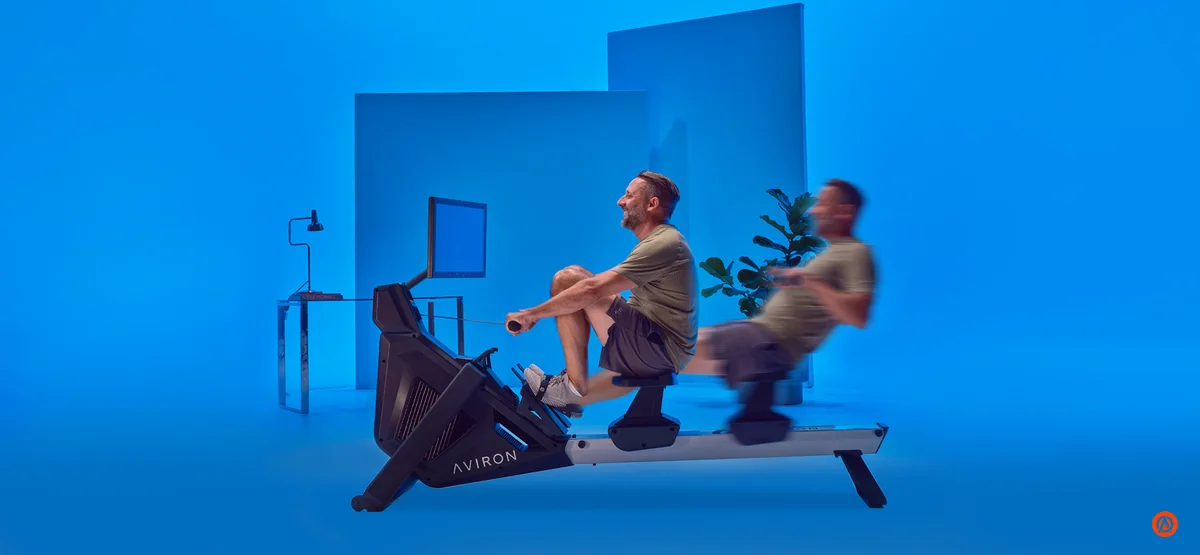
5. Build the legs, because that is where the power lives
The drive is essentially a horizontal leg press. If your legs are the limiting factor, no amount of technique work will fix your ceiling. Squats, deadlifts, split squats, and hip hinges all transfer directly, and a rower with a genuine strength range lets you train the same pattern under load without a second machine.
Two short strength sessions a week is plenty alongside your rowing. You are not trying to become a powerlifter, just to stop being limited by the strongest link being untrained.
6. Pace it properly instead of sprinting the first 500m
Almost every slow 2000m is a pacing failure, not a fitness failure. Go out five seconds per 500m faster than you can hold and you will pay it back with interest somewhere around 1300m, where your split falls apart and never recovers.
The reliable approach is an even or slightly negative split: settle into your target pace after a short punchy start, hold it honestly through the awful third 500m, and spend whatever is left in the final 300m. A flat 2:02 the whole way beats a 1:55 opening and a 2:15 collapse, every single time.
Common mistakes that quietly cost you seconds
- Chasing stroke rate instead of power per stroke. A high rate with a weak drive just moves the handle a lot. Watch watts, not just the rate.
- Yanking with the arms at the catch. Covered above, and worth checking on video because it never feels wrong from the seat.
- Rowing every session at the same medium effort. Too hard to recover from, too easy to improve from.
- Testing your 2000m every week. It is a test, not a workout. Every four to six weeks is plenty.
- Ignoring the damper and the dust. A clogged flywheel housing changes your drag factor without telling you.
The consistency problem: none of the above works if you stop rowing in March. That is the actual reason most 2000m times never improve, and it is why Aviron builds games, races, and leaderboards into the machine. 92% of members are still working out a year later.
Frequently asked questions
What is a good 2000m row time?
As a rough guide from self-reported community data, beginners typically land between 8:00 and 10:00, intermediate rowers between 7:30 and 8:30, and advanced rowers between 7:00 and 7:45. Elite men go under 6:00 and elite women under 7:00. Treat these as loose bands rather than standards, because 2000m time is strongly influenced by body mass, height, and age. A lighter rower producing the same watts will always post a slower time on the erg, which is why competitive rowing has weight categories at all.
What does split time mean in rowing?
Split time is how long it would take you to cover 500m at your current pace, shown as minutes and seconds. It is the rowing equivalent of a per-mile pace in running. Because a 2000m is four 500m segments, multiply your average split by four to get your finish time: a 1:55 split is a 7:40 2000m.
How long does it take to improve your 2000m time?
If technique is your limiter, you can find five to ten seconds per 500m within a few sessions, because you are unlocking your legs rather than getting fitter. Fitness-driven gains are slower: expect a few seconds per 500m over six to eight weeks of consistent training. The fitter you already are, the smaller and harder-won each second becomes, for the cubic reason in the table above.
What stroke rate should I use for a 2000m?
Most people race a 2000m somewhere in the mid 20s to low 30s strokes per minute, but the number matters less than the power behind each stroke. Find the rate where you can hold your target split with a strong, clean drive, then keep it steady. If your split slips when you raise the rate, the rate is too high for your current strength.
Should the damper be higher for a faster 2000m?
Usually not. A high damper feels powerful but fatigues your muscles before your aerobic system has done its job, and it slows your stroke rate. Most rowers post their best 2000m at a moderate setting in the 3 to 5 range with a brisk rate. Experiment across a few sessions and let the split decide, not the sensation. If you are still learning the movement, start with how to use a rowing machine first.
Up to 100 lbs of magnetic resistance for the leg strength work, stores upright with no wall mount, and runs at about 60 decibels.
Go chase a faster split
Train your 2000m on a rower you will actually want to sit on. Try it at home for 30 days, and if it does not earn its place, send it back.
Start your 30-day risk-free trial →30-day risk-free home trial · 0% APR financing available · HSA/FSA eligible · free shipping


