How Many Calories Does Rowing Burn? The Real Numbers by Weight and Intensity
By The A-Team
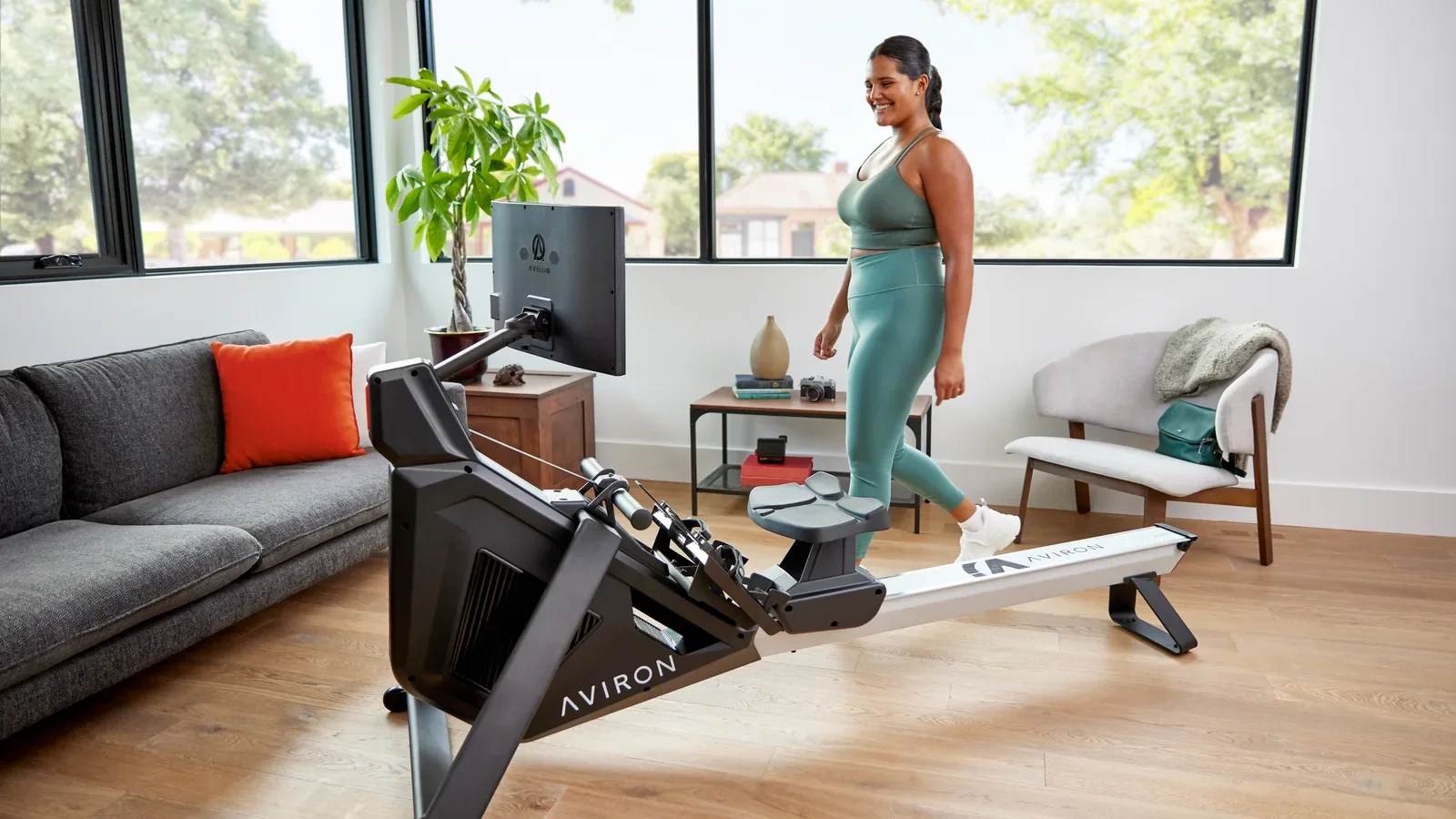
Most adults burn about 210 to 530 calories in 30 minutes of moderate-to-vigorous rowing. The exact number comes down to two things: how much you weigh and how hard you pull. As a quick benchmark, a 155-pound person burns roughly 260 calories at a steady, moderate pace, and closer to 445 in hard intervals. An easy warm-up pace lands lower, around 145 to 245, while a heavier rower pushing all-out intervals can clear 600.
Below is the full breakdown by weight and effort, how those numbers are actually calculated, why the figure on your rower's screen is not always the truth, and the one thing that decides whether any of it adds up: showing up tomorrow.
In this article
- How many calories does rowing burn in 30 minutes?
- How is rowing calorie burn actually calculated?
- Are the calories on the rowing machine screen accurate?
- Does rowing burn more calories than running or cycling?
- How can I burn more calories rowing?
- FAQ
How many calories does rowing burn in 30 minutes?
Calorie burn scales with your body weight and your effort. Find your weight, then read across by how hard you are working. A "light" pace is a relaxed warm-up you could hold a full conversation through. "All-out intervals" means short, hard pushes where talking is not happening.
| Body weight | Light | Moderate | Vigorous | All-out intervals |
|---|---|---|---|---|
| 125 lb (57 kg) | 145 | 210 | 255 | 355 |
| 155 lb (70 kg) | 175 | 260 | 315 | 445 |
| 185 lb (84 kg) | 210 | 310 | 375 | 530 |
| 215 lb (98 kg) | 245 | 360 | 435 | 615 |
Estimated calories burned in 30 minutes of rowing, by body weight and effort. Calculated from standard MET values (4.8 to 12.0). These are estimates, and individual results vary.

How is rowing calorie burn actually calculated?
The numbers above come from a formula exercise scientists use called the MET method. A MET (metabolic equivalent) is how much energy an activity costs compared to sitting still. The formula is simple:
Calories per minute = METs x 3.5 x your weight in kilograms / 200
Stationary rowing runs from about 4.8 METs at an easy pace up to 12 METs at a hard, 200-watt effort, according to the Compendium of Physical Activities. Plug in your weight and your effort and you get your personal estimate. Our table lines up closely with Harvard Health's published figures, which put a 125-pound person at about 210 calories for moderate rowing and 255 for vigorous over 30 minutes.
The takeaway: two people on identical rowers for the same 30 minutes can burn very different amounts. A heavier person moving more mass burns more, and anyone who picks up the intensity burns more again.
Are the calories on the rowing machine screen accurate?
Close, but treat it as a ballpark. Most rower consoles estimate calories from your power output (watts), which they measure well. The catch is that many use a fixed formula built around an average body weight, so the screen can read high if you are lighter than average and low if you are heavier. Wearables and machines in general are notoriously imperfect here. One Stanford study found even the best fitness tracker was off on calorie burn by an average of 27 percent.
So use the on-screen calories the smart way: as a day-to-day yardstick to beat, not gospel. If yesterday's 20-minute row showed 180 and today shows 210, you worked harder. That trend is what matters, not the third decimal place.
Does rowing burn more calories than running or cycling?
At the same effort level, the three are in the same neighborhood. Running edges out rowing slightly for raw calories minute for minute, and cycling tends to sit just below rowing. But raw calories are only half the story:
- Rowing is full body. A single stroke works all your major muscle groups, legs, core, back, and arms, while running and cycling lean heavily on the legs.
- Rowing is low impact. There is no pounding through your knees and hips, so most people can row hard more often without the joint wear that sidelines runners.
- More muscles working means more strength stimulus alongside the cardio, so you are building while you burn.
In other words, the best calorie-burning machine is not the one with the highest number on a chart. It is the one you will still be using in three months.
How can I burn more calories rowing?
Four levers, in order of impact:
- Add intervals. Alternating hard 30 to 60 second pushes with easy recovery spikes your average power and keeps your metabolism elevated after you finish.
- Pull with power, not speed. Driving hard with your legs on each stroke moves more watts than flailing at a high stroke rate. Watts are what the calorie count is reading.
- Row longer. Obvious, but a 40-minute session simply burns more than a 20-minute one. The trick is wanting to stay on.
- Row more often. Five 250-calorie sessions a week beats one heroic 600-calorie session you dread and skip.
Notice that three of those four come down to one thing: actually wanting to get on the machine, and stay on it. That is exactly where most rowers fail, and it is the problem the Strong Series Rower was built to solve.
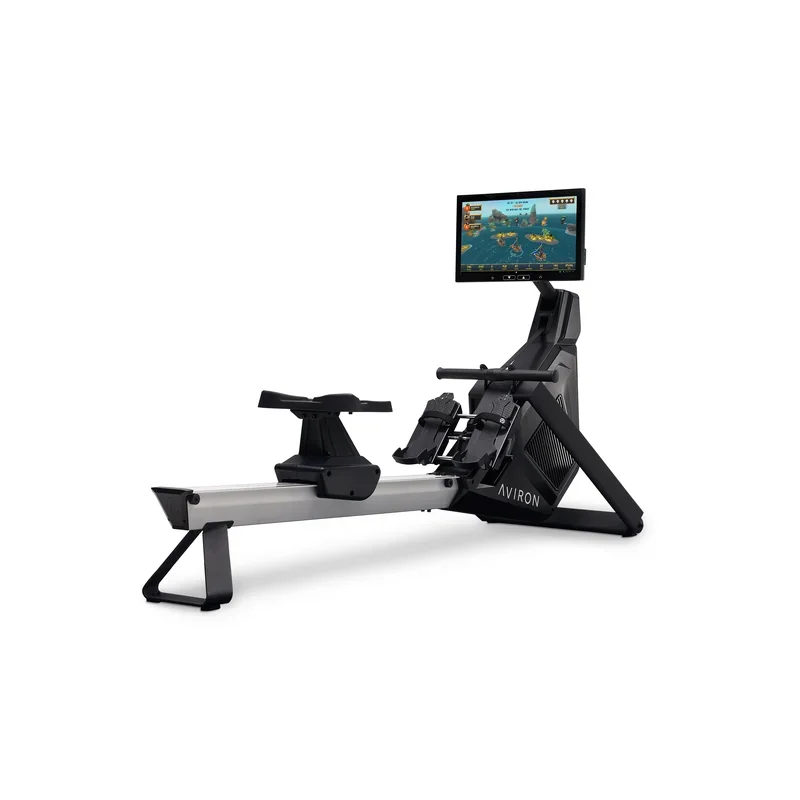
A 22-inch HD touchscreen loaded with games, live races, coached classes, and streaming, so a hard 40-minute row flies by.
Shop the rower →The calories only count if you keep rowing
Here is the part the calorie charts skip. A rower that burns 500 calories a session is worth exactly zero if it is draped in laundry by February. The first week is exciting, the third week is a chore, and most home rowers quietly become a very expensive clothes rack. Not because rowing does not work, but because staring at a wall for 30 minutes gets old fast.
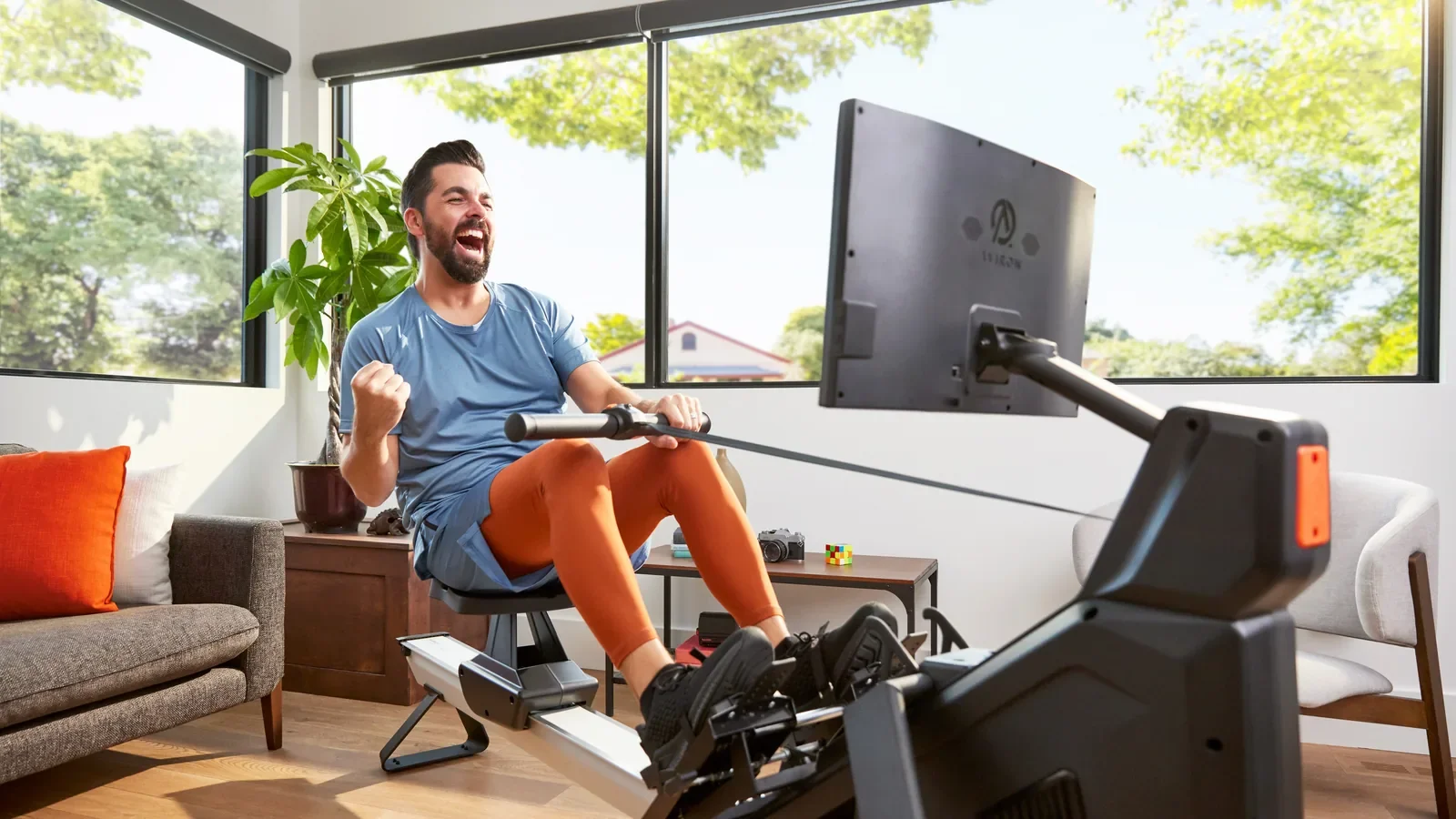
Aviron flips that. The workout itself is the game. You are racing other people on a live leaderboard, blasting through challenges, chasing a story, or just streaming your show while you pull. You forget you are counting calories at all, which is the whole point. It is why 92 percent of members are still rowing a year later, and why those sessions tend to run long.
"I always think I am only going to work out for 10 minutes, but it has consistently turned into 30 or 40 minutes."

Frequently asked questions
How many calories does rowing burn in 30 minutes?
About 210 to 530 calories for most adults at a moderate-to-vigorous pace, depending on body weight and intensity. A 155-pound person burns roughly 260 at a moderate pace and up to 445 in hard intervals. An easy warm-up pace burns less, and a heavier rower going all-out can top 600.
Does rowing burn more calories than running?
At equal effort, running burns slightly more calories minute for minute. But rowing works far more muscle and is much gentler on your joints, so most people can row hard more often without the impact, which usually wins over the long run.
How many calories do you burn rowing for 20 minutes?
Roughly two-thirds of the 30-minute figures, so about 140 to 350 calories depending on your weight and intensity.
How many calories does rowing burn per hour?
Roughly double the 30-minute numbers, so about 420 to 1,060 calories per hour, though sustaining vigorous intensity for a full hour is hard for most people.
How many calories do I need to burn to lose a pound?
About 3,500 calories is the common estimate for one pound of fat. You cannot out-row a poor diet, but a steady rowing habit makes the math a lot more doable over time.
Burn the calories. Forget you are exercising.
The Strong Series Rower turns every session into a game, a race, or your favorite show. That is how members keep coming back.
Shop the Strong Series Rower →Flexible financing available.


